
Blade Failures Aren’t Going Anywhere, And Neither Is The Need For Blade Specialists – Insights from Wind Power LAB CEO

Wind turbine blade failures are an unavoidable reality of wind energy, and as turbines grow larger and more complex, the demand for specialist insight is only increasing. Wind Power LAB (WPL) has spent over a decade building market-leading expertise in wind turbine blade advisory, consulting and innovation, delivering more than 700 repair recommendations in the last year alone. We recently sat down with Lene Hellstern, who joined as WPL CEO earlier this year, to find out what she’s learned so far, and the exciting developments taking place across the company and wider industry. What Was Your First Impression Of The Team? Lene admits she wasn’t sure what to expect when she joined Wind Power Lab. What she found, she says, exceeded it. “What struck me immediately was the collective depth of knowledge about turbine blades, not just technically, but a level of pattern recognition that only comes from years in the field. I’ve watched team members look at a handful of images of a damaged blade and identify the likely root cause before anyone has said a word. I’ve seen them name the damage a client wants to discuss before the client has brought it up in the meeting. All they knew was the blade type. I haven’t met a team like this before.” What Stands Out When Working With Clients? Blade issues rarely come at a convenient time for clients. The team at WPL brings clarity to a stressful situation, offering the kind of guidance that only comes from having seen a problem many times before. “Since joining, I have already had the opportunity to meet more than 40 of our clients, which means lots of meetings, but very rewarding ones. Often, clients come to us when something has gone wrong with a blade. The response our team is able to offer in those situations is simple but significant: we’ve seen this before, and we know how to approach it. That matters more than people might expect.” What Excites You About The Technology Developments At Wind Power LAB? Blades are one of the most critical components on a wind turbine, yet they’re often the least well understood. “The volume of cases means the team’s instincts keep getting sharper. Every case is essentially a mystery to be solved, and very few organisations are seeing failure patterns at the scale we are. It is an underappreciated strength and one of the reasons I love my job here.” From a technology perspective, Wind Power LAB is taking major strides to develop industry-changing software, which is driving enhanced visibility and data-driven insights to owners and operators globally. LASSIE, Wind Power LAB’s lightning detection system, requires no turbine communication and no installed sensors. It allows operators to identify historical lightning events and assess risk across both operating wind farms and sites still in development. “Since its launch, LASSIE has already supported over 5300+ wind turbines across 20 countries worldwide. I wish I had access to a system like this when I was working with development projects earlier in my career, technology like this is a huge win for the industry, allowing for much earlier detection of potential risk. Wind Power LAB is also in the process of bringing an internal blade analytics platform to the market. With the ongoing development of the new technology, we are able to ensure crucial insights are more accessible to those who need it.” What Does The Next Chapter Look Like For Wind Power LAB? Four new individuals will be joining the team in the coming weeks, supported by existing client demand. With blade failures showing no sign of decreasing across the industry, the need for deep specialist expertise is only growing. “I’m proud that we have been able to attract such experienced professionals to the company, and we are fortunate to have loyal clients who have trusted us for many years. We are excited to share further updates in the coming weeks as we continue to grow our team of talented individuals. With the expertise in the team and the software we are developing, Wind Power LAB has tremendous potential for growth in the pipeline this year. I’m particularly excited to see how the industry responds as we bring solutions like LASSIE and our blade analytics platforms more widely to the market.”. Want To Connect? Want to learn more about our services or how we can support? Reach out to us at contact@windpowerlab.com or take a look at our services here. Follow WPL on LinkedIn to stay up to date with the latest news.
Blade Maintenance Strategy Considerations For A Wind Farm
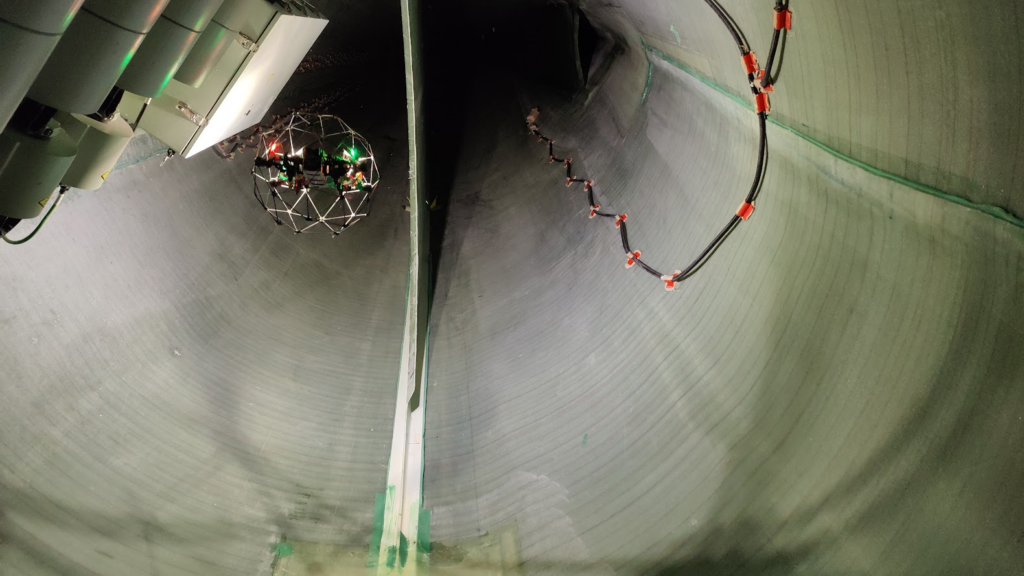
A blade maintenance strategy is essential for the successful operation of a wind farm. It is now a well-known fact that blades will require maintenance over the lifetime of a windfarm, and a structured approach is required to minimize the associated costs. Even though there are general guidelines on how often to inspect and repair blades, it is often required to include specifically tailored elements, based on the turbine(blade) type within a windfarm, its geographical location, as well as environmental conditions. In this article we will cover considerations about the inspection and repair planning for different stages of a wind farm’s lifecycle. Wind turbine age Wind turbine age is an important factor when determining the most appropriate maintenance actions for its blades. In our workflow, there are three main stages in the operation cycle of a turbine. Early life (0-5 years in operation) – During that phase there is high emphasis on the structural and surface integrity of blades. Mid-life (5-20 years in operation) – During that phase there is high emphasis on the production availability of a turbine. Late life (20-25 years in operation) – During that phase the emphasis is on ensuring the safe operation of a windfarm with minimal cost of repairs and inspection. Inspection planning A well-planned inspection campaign is needed to detect blade defects and ensure they are repaired in the right time. A balanced inspection campaign ensures sufficient coverage of blades, without adding unnecessary downtime to the wind farm. Early life inspection planning – Inspection campaigns are carried out to create a baseline for the blades’ condition in the windfarm. In the first years of the turbines’ operation the structural defects that appear will be mainly related to manufacturing inconsistencies, or incidents during transportation and installation. On the surface condition spectrum, defects are expected if there have been non-conformities during the Leading Edge Protection (LEP) application in factory, or if the selected material does not have the required erosion resistance properties for the given location. A highlight from the early life inspection planning is the End of Warranty (EoW) campaign, that aims to discover and claim manufacturing related defects. Even after the EoW is complete frequent inspections add value, as they will help with assessing the repair quality and discovering early life fatigue damages. Mid-life inspection planning – Inspection campaigns cover certain portion of the windfarm to check the general condition of the blades, after the baseline has been built in the first years of operation. In the Mid-life inspection planning, the site specifics play an important role, as inspections are planned around the most influential environmental effect, or a known manufacturing/design flaw. An example can be inspection campaign revolving around lightning activity, where blade inspections are motivated by lightning hitting in the collection area of a turbine. In this case, when checking for potential damages on the blades from the lightning event, the inspection will also record and assess the general blade condition. Another example can be inspection campaigns at the end of winter season, that will capture potential icing damages. Late life inspection planning – The inspection approach in the last years of a wind farm includes creating an overview for the blade conditions, and observation of specific defects that have been left untreated. When the turbines approach decommissioning an equation about inspection frequency, repair/monitor, turbine shut down shall be solved to minimize costs. Wind turbine Blade Maintenance – Early Life Fatigue Repair planning Early life – The repair scope consists of structural defects in all blade areas, LE surface defects exposing surface laminate in the erosion zone, and all malfunctioning systems and addons on the blade. Eligible defects are repaired without delays, or turbines are curtailed/stopped until environmental conditions are suitable to avoid added fatigue increasing the scope and complexity of the repairs. End of Warranty campaigns are usually the time when major retrofits are installed over large parts of the portfolio if required. Mid-life – Repairs are planned and performed over repair campaigns, unless a critical defect that requires immediate response is detected during inspections. In the start of this period repairs will revolve around specific issues generated by the surrounding environment, or blade type. Towards the end of the mid-life some fatigue related structural damages are expected to appear. Late life – During that phase only major structural damages are considered for repair, while surface defects are neglected. When the turbine approaches decommissioning, repairs are evaluated against the expected revenue generated by the turbine and sometimes turbine shut down is more viable option. Closing Remarks The goal of a blade maintenance strategy is to minimise operational cost by undertaking a structured approach in inspection and repairs. It should be noted that it is an evolving protocol based on the condition of a windfarm. It is important to understand defect development rates and most influential environmental effects for each site to ensure efficient approach. Consistent defect marking and classification lies in the basis of creating a functional blade maintenance strategy. Reach out to our specialist if you need support in determining the best data-driven approach for inspection and repair of your wind turbine blades.