When a wind turbine is struck by lightning, one of the first questions owners and operators face is ‘what should we do next?’ The challenge is that not all lightning events are created equal. Some strikes pass through a turbine’s lightning protection system (LPS) without causing damage, while others can lead to costly blade repairs, extended downtime, or hidden defects that may not become apparent until much later.
Making the right maintenance and inspection decisions depends on having access to the right data. From strike location and peak current per strike, to first-stroke and subsequent-stroke characteristics, accurate lightning event data provides the insight needed to assess risk, prioritise inspections, and make confident, evidence-based decisions after a lightning event.
Keep reading to learn more about the data you should have access to and why it matters.
Strikes Per Turbine
The number of strikes per turbine is a measure of how often a turbine is exposed to lightning strikes. Although a higher number of strikes doesn’t mean a turbine will automatically fail, it is a good indicator that the turbine will require better protection and more careful maintenance planning.
Blade inspections are expensive, especially offshore inspections. Identifying exactly which turbines were struck during an event, ensures that inspections can be prioritised with certainty, not assumption. This reduces unnecessary maintenance visits while lowering the risk of missing serious damage.
Peak Current Per Turbine Strike
Not all lightning strikes are equally damaging. A wind turbine that is hit by multiple low current strikes may be less at risk than one that gets fewer high-current strikes.
Being able to calculate attachment probability at a turbine level, allows for improved estimate of actual risk. This can be calculated through a combination of factors, such as turbine height, terrain, and strike location uncertainty. Even two turbines in the same wind farm can have different lightning exposure.
With this information, services such as LASSIE, Wind Power LAB’s lightning service, can calculate attachment probability including where the strikes are likely to attach and how strong those strikes are likely to be.
The financial implications for wind farm owners/ operators who lack turbine-level intelligence:
- Inspect every nearby turbine, causing unnecessary downtime and expenses
- Don’t inspect the turbines and risk missing hidden damage until much later
IEC 61400 -24
For wind turbines, IEC 61400-24 (the lightning protection system standard for wind turbines) defines requirements around lightning protection, verification and assessment of lightning events. The exact operation actions depend on the turbine design, manufacturer requirements, service agreements and owner procedures.
Generally, a lightning strike above a certain severity may trigger an inspection or assessment obligation. Knowing immediately whether any strike exceeded the IEC 61400-24LPL-1 threshold matters, as this can change your response obligation.
A low-current strike may be within the range that a wind turbine’s LPS is expected to safely handle. A high-current strike may indicate increased stress to the turbine, and hidden blade damage is more plausible.
First stroke VS Subsequent Stroke
A lightning strike, also known as a ‘flash’, is usually made up of multiple strokes. The first stroke and the subsequent strokes behave differently, and that difference matters for blade receptor systems.
Typically, a cloud-to-ground lightning flash consists of:
- First stroke (initial attachment and main stroke)
- Subsequent stroke (re-strike along the same channel)
Being able to distinguish between these is another crucial insight, because the two types of strokes have different electrical characteristics and therefore different implications for turbine damage. Subsequent strokes present different risk profiles for blade receptor systems.
Historical lightning activity
A single lightning event tells you a little, a year of lightning event data shows a lot. One year of historical lightning data is likely enough to reveal patterns that you cannot always see from live strike data or short-term alerts.
Solutions such as LASSIE offer historical data from day one, allowing you to access years of lightning history at your site, not just data going forward, but a complete retrospective baseline.
Most importantly, this is a cloud-based system which means no hardware installation required to access the data you need quickly and efficiently.
Why does this data matter?
For owners, lightning is a major source of blade insurance claims. The more data you have, the clearer the picture. This data creates a much stronger basis for insurance and warranty discussions and ensures that owners have sufficient records, evidencing the exact details of any lightning strike events.
- Whether damage is actually lightning-related.
- Severity of the event.
- Whether the event exceeded design assumptions.
- Whether warranty obligations may apply.
LASSIE – Lightning Surveillance Solution
Making the right maintenance and inspection decisions depend on having access to the right data, which is where LASSIE comes in.
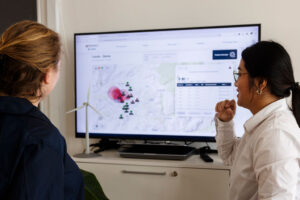
Owners and operators now have access to a painless way to manage lightning risk at a turbine level, with no sensors and no hardware installation. All that is required is the wind turbine coordinates and turbine type to set up a dedicated lightning surveillance dashboard and access the crucial data needed to make informed decisions without the hassle.
If you would like to learn more about how to access your lightning data, please contact our team at contact@windpowerlab.com to book a free demo session of LASSIE.